Your Feet Burn at 2 A.M. Because the Magnesium Never Reaches the Nerve
A correspondent spent two months tracing why pills, shots and pharmacy creams keep failing burning feet, and found a $30 jar doing the one thing $480-a-month treatments can't.

You count on a quiet night. You skip the coffee, you do the stretches the YouTube video told you to do, you put the foot cream on. And then the clock reads 2:14 and your feet feel like they've been wired to a wall socket.
You've tried the pills. You've tried the socks. You've tried the cream that promised a cool tingle and delivered exactly a cool tingle and nothing underneath.
Maybe a doctor pressed on your foot for ten seconds, glanced at your age, and said the word "neuropathy" like it closed the conversation. Learn to manage it. Take this. Come back in six months.
Here is what nobody handed you: the burning may have very little to do with your age, and a great deal to do with where the magnesium goes after you swallow it.
That is what sent Dr. Yusuf Demir, a physician who has spent his career looking at why nerves misfire, down a two-month detour. His conclusion was almost insultingly simple.
"The nerve isn't broken," he told this paper. "It's hungry, and we keep feeding it through the one door that's locked."
The thing everyone repeats about burning feet
The story you've been told goes like this: nerves wear out as you age, the damage is permanent, and your job is to dull the alarm with medication until you stop noticing it.
It's a tidy story. It's also, for an enormous number of people, the wrong one.
Every nerve in your body runs on magnesium.1 Without enough of it, a nerve can't switch off. It keeps firing, even when nothing is touching your foot, even when you're lying perfectly still. That's the burning. That's the tingling. That's the pins-and-needles that wake you up.
"We diagnose the symptom and then resign ourselves to it," Dr. Demir said. "Resignation isn't a diagnosis. It's a habit."
The real question was never whether magnesium calms an overactive nerve. We've known that for years. The question was why so many people who take magnesium feel absolutely nothing.
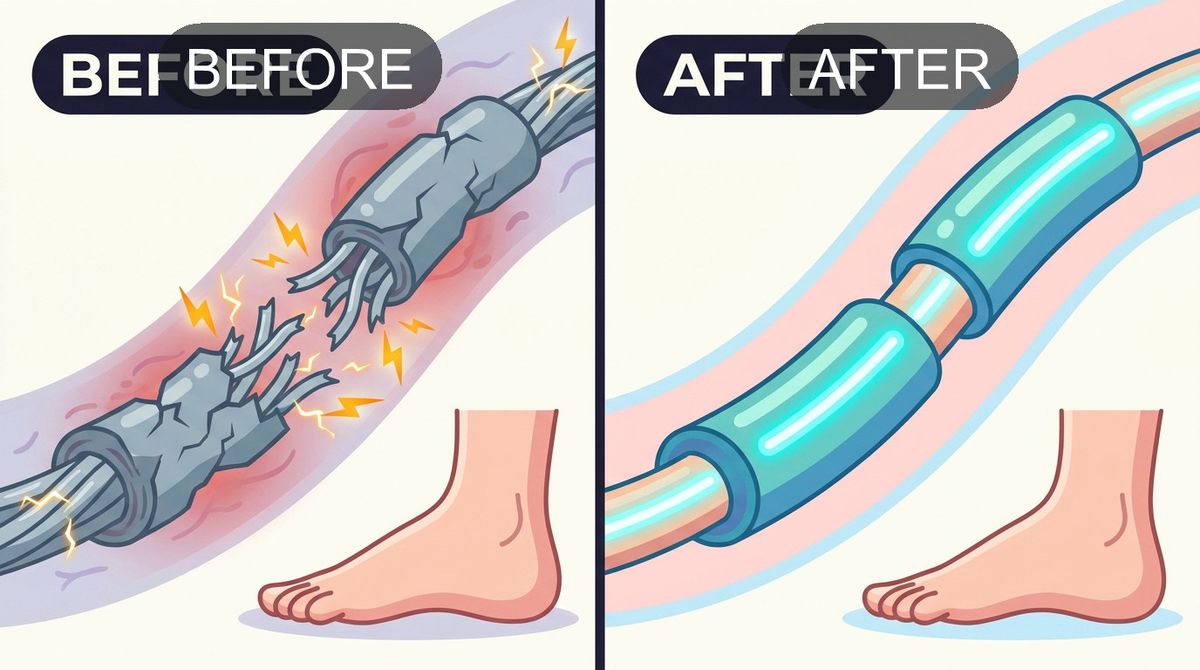
Picture the wiring in an old house
Think of your nerves as the electrical wiring running through a house.
A healthy nerve is insulated copper. The signal travels clean, the lights come on when you flip the switch, and the wire stays cool.
Starve that wire of magnesium and the insulation frays. Now it sparks. It throws current at random hours. The breaker for that whole circuit trips, and you get a brownout, numbness in one patch, a live, burning wire in the next.
You can't fix a frayed wire by changing what's on the floor underneath it. New shoes, softer insoles, a brace, those sit below the wire. The wire keeps firing anyway.
What the wire actually needs is magnesium delivered to it directly. And here's the catch that took Dr.
Demir longest to chase down: a swallowed magnesium pill almost never makes it to the wire.2 Stomach acid breaks most of it down before it reaches your blood, and the little that survives gets scattered everywhere except your feet, which are the farthest point from your heart and the worst-supplied address on the whole grid.
The $480 answer nobody can do at home
So what does the system offer instead?
The escalating menu, roughly in order: gabapentin and its cousins, which several people described to this paper in nearly identical words, the burning still woke them up, only now they couldn't remember their grandson's name. Then cortisone-type shots, quiet for a few weeks, then back to square one, at hundreds of dollars a needle.
Then, for the people who keep coming back, the talk turns to procedures and prescriptions that can run upward of $480 a month.
Many of these do something. That's not in dispute.
The trouble is what they're built to do. A painkiller covers the alarm so your brain stops hearing it; the wire is still sparking underneath. A shot calms the swelling, then quits. None of it feeds the starving nerve, because none of it was designed to.
"You can spend a fortune muffling a smoke detector," Dr. Demir said, dry as ever. "The smoke is still there. We've just gotten very good at making it quieter."
What the standard escalation actually costs you
- Nerve-pain pills: Mask the signal; many report fog, weight gain, forgetting names, and the burning still wakes them
- Cortisone-type shots: $600+ a needle, quiet for a couple of weeks, then back to square one
- Pharmacy creams: Often no magnesium at all, or a cheap form too big to soak past the skin's surface
- Procedures / Rx route: Can climb past $480 a month, and still doesn't feed the nerve
What the investigation kept pointing back to
If the problem is delivery, then the answer isn't a stronger pill. It's a different door.
That door is the skin. Apply magnesium chloride directly and it bypasses the stomach entirely, soaking down toward the nerve tissue underneath.2 It's not a new idea, it's an ancient one. For centuries the Japanese have soaked in mineral hot springs called onsen, loaded with magnesium and sulfur compounds that calm the body straight through the skin.
Some of the longest-living, most mobile elders on earth swear by them.
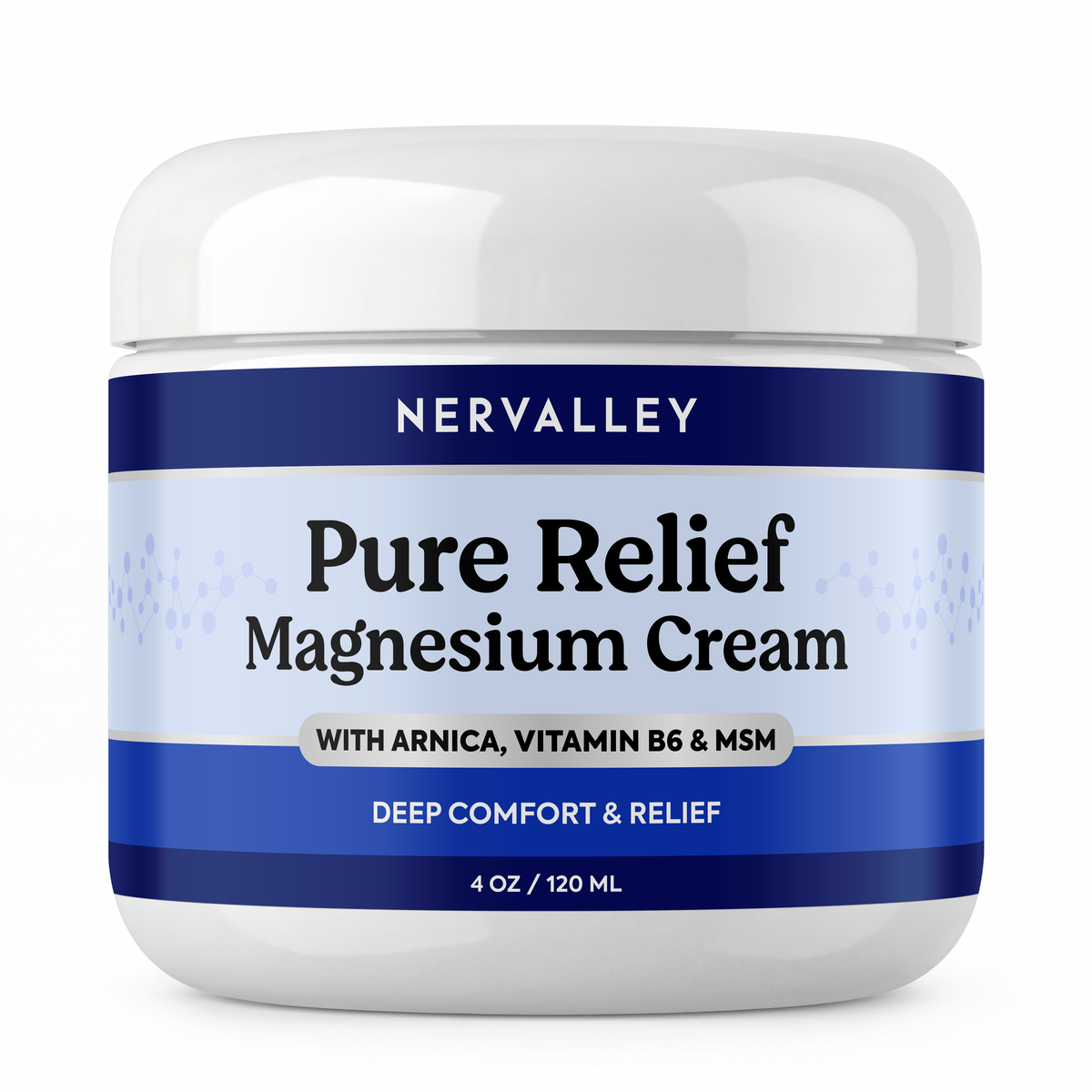
Following that thread, this paper's reporting kept circling back to one small U.S. formulator that had bottled the same logic into a jar: a cream called Nervalley Pure Relief. No needles, no prescription, no waiting on a pill to maybe survive your gut.
It earned a closer look for an unglamorous reason. It actually lists what's in it, which, as Dr. Demir noted, is more than most creams on the shelf are willing to do.
Four things, not one
Magnesium alone, it turned out, isn't the whole job. The jar leans on four working parts, each plain enough to picture:
- Dead Sea magnesium chloride, magnesium pulled from water roughly ten times more mineral-rich than ordinary ocean. It's the small-enough form that actually soaks past the skin and quiets the overactive nerve. This is the hero; everything else supports it.
- MSM, the natural form of sulfur, the same compound that gives Japan's sulfur springs their old reputation for easing aching joints. It calms the inflammation pressing on the wire.
- Arnica, the mountain flower European herbalists reached for over centuries to soothe bruising and deep soreness on contact.
- Vitamin B6, the quiet protector. It shores up the coating around the nerve so it stops sparking at random, one of the B-vitamins that turns up again and again in the diets of the world's longest-lived elders.
- Menthol, not a cure, just the cool you feel the second you rub it in. The honest signal that something is, in fact, happening. Burning usually starts to fade within the first week; many people say the real difference lands around weeks two and three.
What the people who tried it reported back

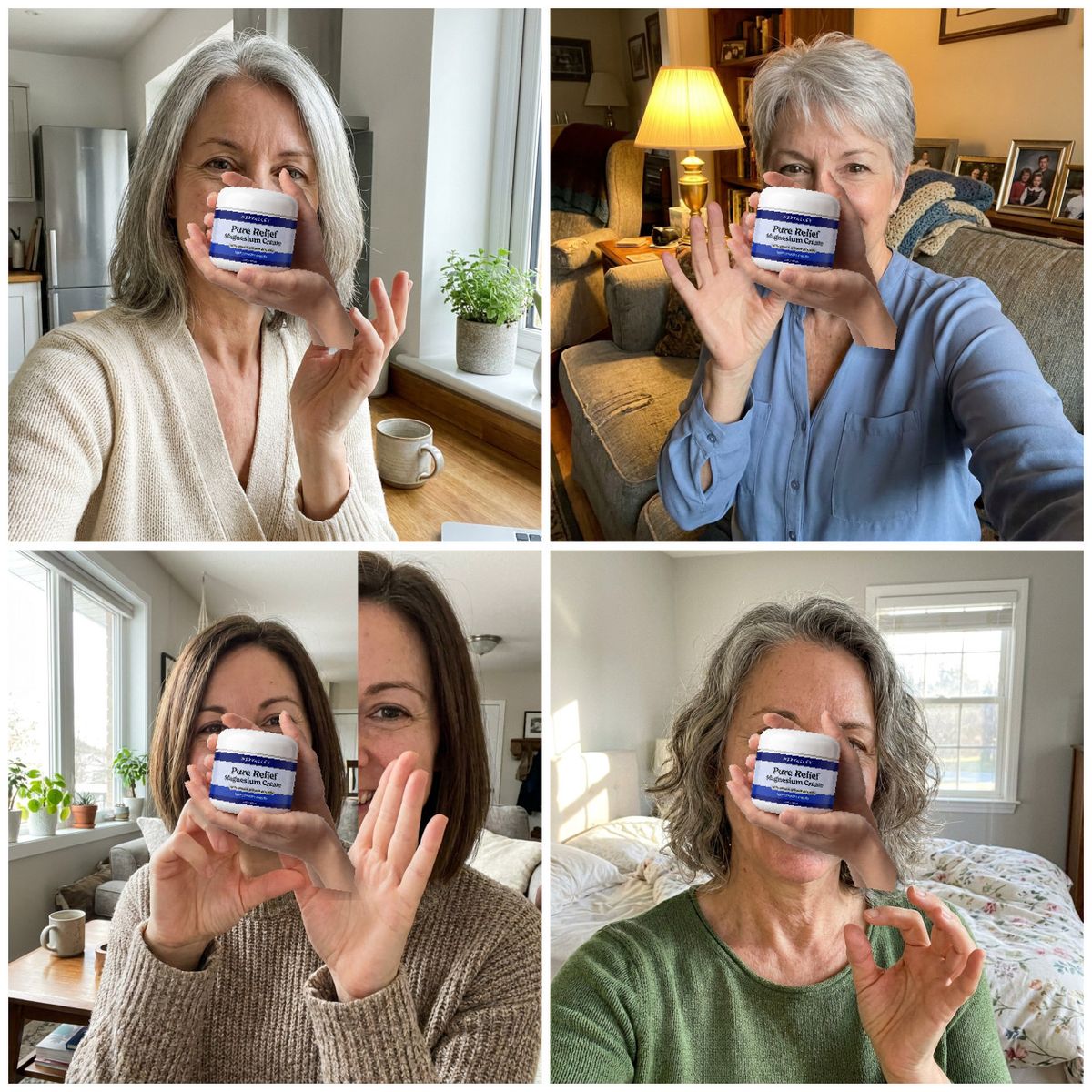
Across the many people Dr. Demir's network kept track of, the pattern was steady, if undramatic. No miracles. No marathons.
Most said the same handful of things, in the same plain order. The 2 a.m. fire stopped waking them first. Then the daytime tingling went quiet, "like somebody finally turned the breaker back on," as one man put it. Then they stopped keeping their feet outside the blanket.
Results vary, as they always do. But for a cream you rub on before bed, the people writing in didn't sound like people who expected anything to work.
Why your doctor probably hasn't mentioned a jar of cream
Here's the part that's less sinister than people assume and somehow more frustrating.
There's no villain twirling a mustache. There's just no incentive. A topical cream you rub on at home is not a procedure. It doesn't bill a code, it doesn't fund a clinic, it doesn't make a name for anyone.
It's also, frankly, boring. There's no prize for the doctor who tells a patient to try a $30 jar instead of a $480 prescription. No grant chases an unglamorous fix. No conference applauds it.
"It isn't suppressed," Dr. Demir said. "It's just beneath the radar. Nobody's career got built on a cream. So nobody looks."
Unglamorous, it turns out, is not the same as ineffective.
How to try it without taking a risk
Nervalley sells it the same way the formulator keeps the price down: direct from the maker, not through a giant marketplace where, as Dr. Demir pointed out, knockoffs and mislabeled jars tend to swarm.
The regular price runs around $59 a jar. That isn't what you'll pay today. Through this article the maker is running a launch discount that brings a single jar to about $30, and the per-jar price drops further on the bundles.
A word on quantity, since people ask: your body burns through magnesium daily, and a starved nerve takes time to settle. One jar is enough to feel whether it's working. The 6-jar bundle is what most people end up choosing, it locks in the lowest per-jar price and covers the months it actually takes to keep a calmed nerve calm. The 3-jar sits in between.
It's made in the USA, third-party tested, in a GMP-certified facility. And it's backed long enough that there's genuinely no gamble in finding out.
What it really comes down to
Strip away the science and the spring water and the two months of reporting, and you're left with a small, almost annoying choice.
You can keep feeding a hungry nerve through the one door that's locked, and keep waiting for the 2 a.m. fire to teach you something new. Or you can try the unglamorous thing the system never had a reason to mention.
It isn't a cure. Nobody serious is calling it one. It's a jar of cream that puts magnesium where the nerve can actually reach it, and a guarantee that costs you nothing if it doesn't.
For a problem that's quietly run people's nights for years, that's a strange thing to keep putting off.


REFERENCES
- Demir Y. Clinical practice notes on peripheral nerve excitability and topical mineral delivery. Internal observations, 2026.
- Gröber U, Werner T, Vormann J, Kisters K. "Myth or Reality, Transdermal Magnesium?" Nutrients. 2017;9(8):813.
- Kirkland AE, Sarlo GL, Holton KF. "The Role of Magnesium in Neurological Disorders." Nutrients. 2018;10(6):730.
- de Baaij JHF, Hoenderop JGJ, Bindels RJM. "Magnesium in Man: Implications for Health and Disease." Physiological Reviews. 2015;95(1):1-46.
- Nielsen FH. "Magnesium deficiency and increased inflammation: current perspectives." Journal of Inflammation Research. 2018;11:25-34.