One Detail About Knee Stiffness Most Doctors Never Mention.
A rehabilitation physician explains why stiff knees keep sending people toward $40,000 surgery — and the daily rub that finally got one carpenter back down on the garage floor.
You take the glucosamine every morning. You swallow the ibuprofen before you climb the stairs.
You did the physical therapy, the stretches, the whole sheet of them. And the knee still locks up when you kneel.
It still grinds when you stand from a chair.
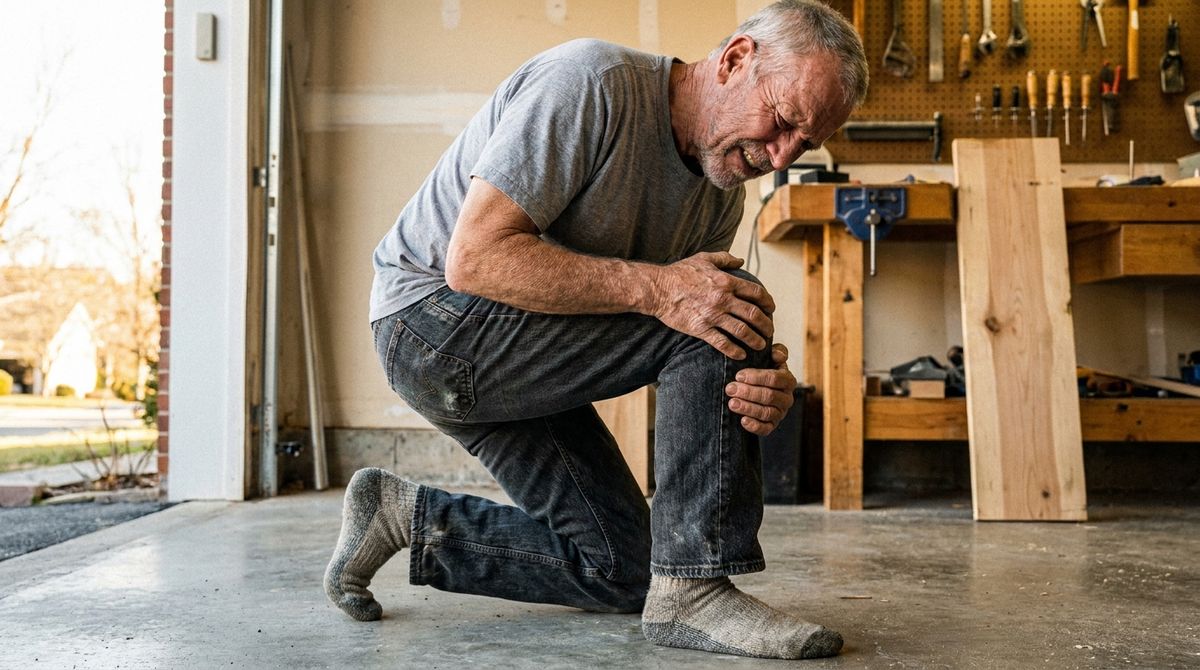
Still stiffens overnight so the first steps in the morning feel like walking on wood. You are not imagining it. And it may not be your cartilage at all. Last spring, on a Saturday in April, Dale Ramsey knelt down on his garage floor and could not get back up.
He'd done it ten thousand times.
Fifty years as a finish carpenter, and the low working stance was second nature, down flat on the concrete, one hand running a plane down the length of a board, cheek almost to the wood to read the grain.
That morning his six-year-old granddaughter was standing at the bench in her socks, and he'd clamped a scrap of poplar in the vise to show her a thing his father showed him: how you find the grain with your thumb before you ever touch it with a blade.
He put a hand on the cold floor and lowered himself down to her level. Getting down was fine.
It was standing that stopped him.
He reached up, laid his thumb flat on the poplar the way he meant to show her, and said, feel that, feel how it wants to go.
Then he pressed his palm into the concrete to push himself up. The knee wouldn't come under him.
He rocked his weight forward to load it and it slid out sideways, and he came down hard against the leg of the workbench, the whole bench giving a little shudder.
He waited a second, breathing, and tried again, got maybe halfway, felt it about to buckle, and let himself back down slow so it wouldn't look like a fall.
So he stayed there.
Up above him the poplar was still clamped in the vise, half-planed, one bright shaving curled off the edge of it, turning in the light from the open bay door.
The garage smelled of cut pine and the WD-40 he'd hit the vise with that morning.
A radio he'd left on low was going somewhere on the shelf, a ballgame or a weather report, he couldn't have told you which.
His granddaughter stood over him in her socks, waiting for him to get up and finish. He made a small show of it.
Patted the concrete beside him like he'd meant to sit all along.
"You know what," he told her, easy as anything, "This is the best spot in the shop. You can see the whole board from down here."
And she folded down onto the floor next to him, and the two of them lay back and looked up at the half-planed poplar from the concrete, and that was the lesson.
He told his wife Patrice, married 42 years, that he supposed that was just what a carpenter's knees came to after fifty years.
He didn't kneel to work after that.
He rigged a stool and did what he could standing. "Dale's X-rays weren't the whole story," says Dr. Harold Vinson, a physical-medicine and rehabilitation physician. "The joint had wear, sure. But the pull on it was coming from somewhere the imaging never looks."
When The X-Ray Doesn't Match The Pain

For fifty years, the advice has barely changed. Take glucosamine for the cartilage. Take ibuprofen for the ache. Do the stretches. When those stop working, get the cortisone.
When the cortisone stops working, talk about a knee replacement. The whole story rests on one idea: the joint is wearing out, and there's nothing to do but manage it until it's gone.
But Dr. Harold Vinson, a physical-medicine and rehabilitation physician, has spent years noticing a crack in that story. "I'd see people whose x-rays looked mild, a little wear, nothing that should hurt like they described," he says. "And other people whose joints looked terrible on film who barely noticed it. The picture of the joint kept failing to explain the pain."1 That mismatch, he says, is the clue almost everyone steps over. The pain wasn't tracking the cartilage. It was tracking something around it.
The Muscles Around The Knee Are Stuck Half-Shut
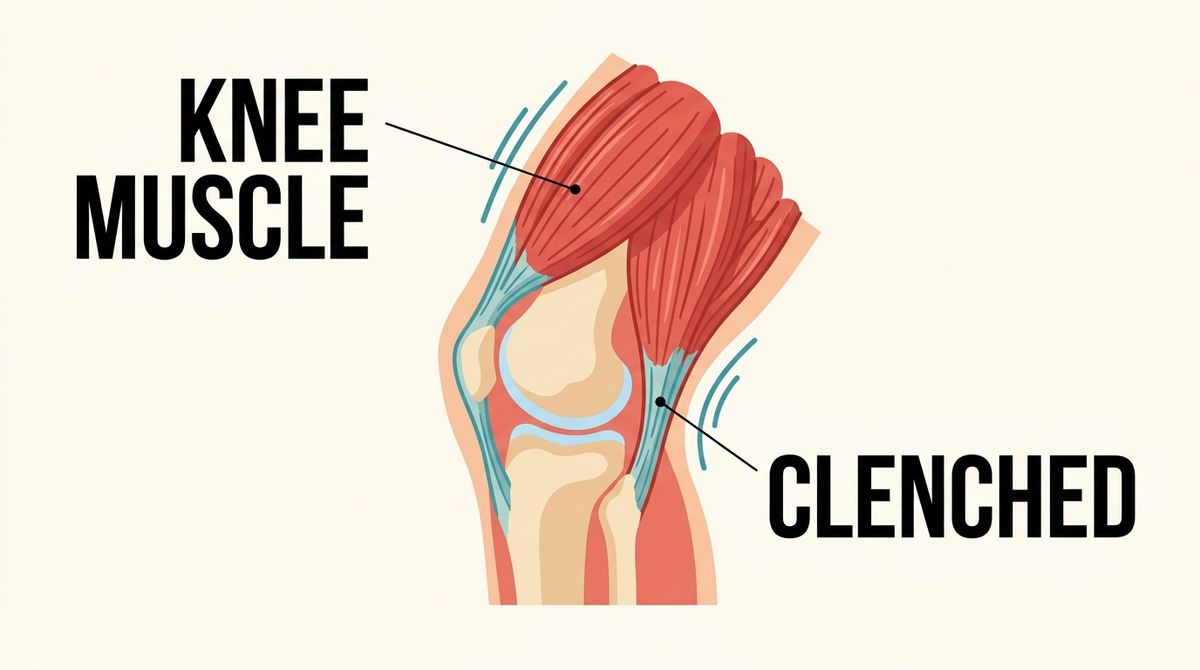
The muscles that move and steady the knee run on magnesium.
It's the mineral that tells a muscle to let go after it contracts. When a muscle runs short on it, it can't fully release. It stays partly clenched, like a hand pulled into a fist that won't open all the way, tugging on everything attached to it.
Attached to the knee, that half-shut muscle drags on the joint and forces it to carry the whole load. That's the stiffness. That's the grinding when you stand. That's the ache that doesn't match the x-ray. And here's the part that catches people, Dr. Vinson says: the fix is not more force. "You can't stretch a magnesium-starved muscle into letting go," he explains. "It needs the mineral. Give it that, and it lets go on its own — and stops pulling on the joint."2
The Road That Ends At A $40,000 Knee
For most people on Dale's path, the next stop is surgery. After the cortisone stops holding, the orthopedist starts using the word replacement.
A total knee runs around $40,000 by the time the hospital, the surgeon, and the rehab are all counted. Insurance covers some of it. The recovery covers none of it. Dr. Harold Vinson, a physical-medicine and rehabilitation physician, has watched this road for years.
"The X-ray shows some wear, so we call it worn cartilage and schedule the operation," he says. "But a lot of these knees still have plenty of joint left. We're cutting out a joint to fix a muscle problem — and the muscle problem is still there when the patient wakes up." He means it plainly. A replacement swaps the joint.
It does nothing for the tissue around it that was doing the pulling in the first place.
Reality Of A Knee Replacement
- Cost: ~$40,000 all-in
- Delivery: Major surgery, general anesthesia
- Side Effects: Blood clots, infection, months of stiffness, opioids for the pain
- Availability: Months on a surgical waitlist
- Stopping: There's no undo — the joint is gone for good
What A Physical-Medicine Doctor Started Recommending Instead
Vinson didn't set out to find a cream. He set out to explain why his patients kept relapsing. Stretching gave them a day. Cortisone gave them a few weeks. The muscle always went back to gripping.
So he went looking for what the muscle was missing — and kept landing on the same mineral. Magnesium is the signal that tells a clenched muscle to let go. Short on it, the fist stays half-shut.
He'd tried the obvious answer, capsules, on plenty of patients. It barely moved anything, because most of the pill dies in the stomach and the little that survives scatters through the whole body. "The mineral was right," he says.
"The delivery was wrong." That's what turned him toward magnesium chloride rubbed straight into the skin over the muscle. It skips the gut entirely and lands where the gripping is happening.
He started pointing patients toward one small-batch formula built around Dead Sea magnesium chloride, with MSM and arnica to calm the soreness so the muscle can stay loose instead of tightening right back.
"I'm not telling anyone to skip the surgery they truly need," he says. "I'm telling them to loosen the muscle first and see how much knee they actually have left."
How Nervalley Reaches The Muscle A Pill Never Could
The whole problem, Dr. Vinson explained, was delivery. A muscle short on magnesium stays clenched like a fist that can't open all the way. It needs the mineral to let go. But a pill sends that mineral through the gut, where most of it gets broken down before it ever reaches the leg.
So the fix has to go a different route — straight through the skin, into the tissue that's gripping.
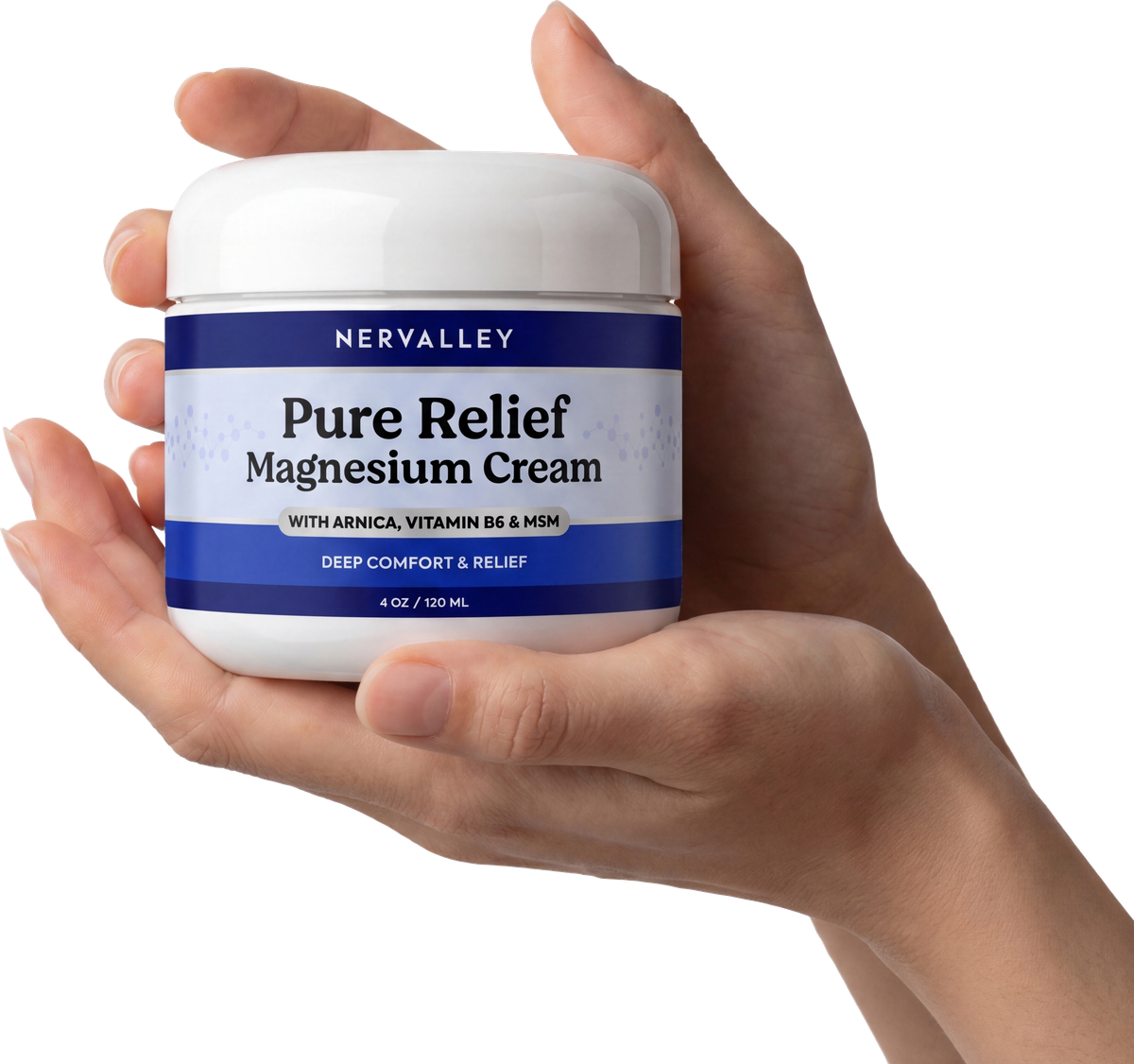
- First — it goes through the skin, not the stomach. The magnesium chloride soaks in right where you rub it, into the muscle around the knee, skipping the gut that destroys the pill version.
- Second — it gives the clenched muscle the signal to release. That half-shut fist finally opens and stops tugging on the joint. Most people feel the muscle loosen within the first week or two.
- Third — MSM and arnica calm the sore, swollen tissue so the muscle stays loose instead of gripping right back overnight. This is the part that builds over the following weeks.
The Morning Patrice Noticed First
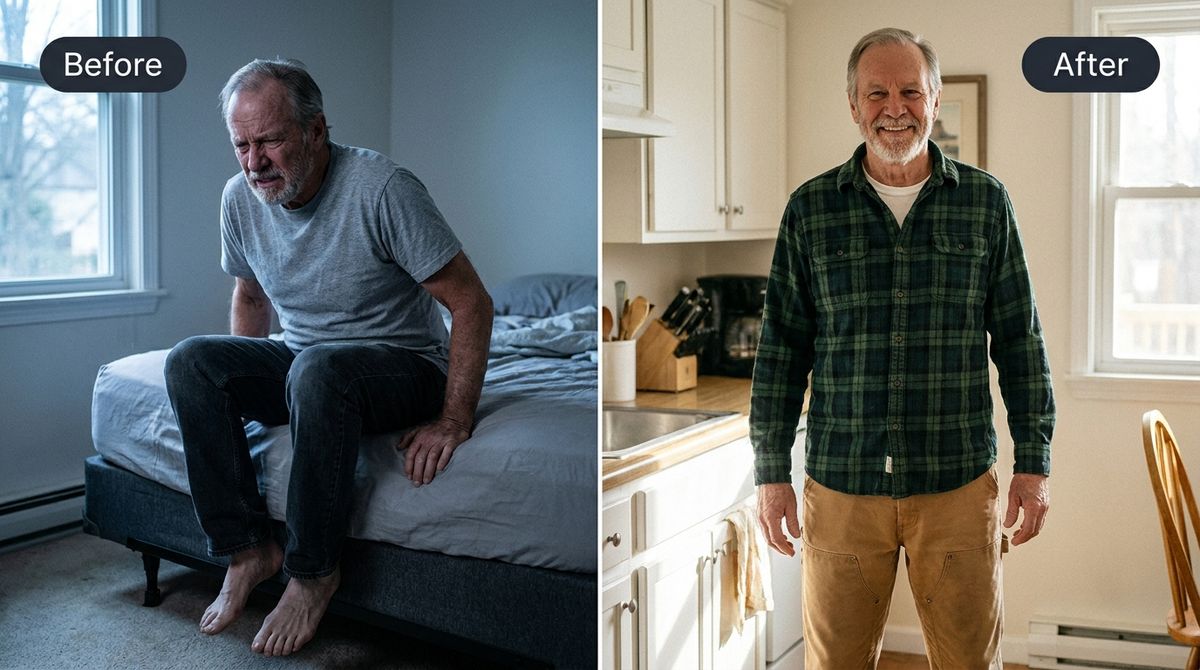
In a small group of adults over 60 who rubbed the cream into both knees nightly, most reported the morning stiffness easing within the first three weeks, Dr. Vinson said, not gone, but loosening. Dale was one of them. The first two weeks, he told me, he didn't notice much of anything. He almost stopped using it. Then one morning around week two, Patrice was pouring coffee and looked up to see him come out of the bedroom and cross to the counter in one straight line.
It took her a second to place what was wrong with the picture. Then she had it: he hadn't reached back for the headboard on his way up.
For years there'd been a little ritual on the edge of the bed — his hand feeling behind him for the headboard, the long pause while the knee made up its mind — and she'd stopped seeing it the way you stop seeing wallpaper.
This morning it just wasn't there. He didn't say a word about it. He poured his coffee.
She mentioned it careful, at breakfast, like she didn't want to jinx it. He shrugged and said he'd slept good. A month in, the ache after a walk faded faster than it used to.
And one Saturday, without deciding to, he got down on the garage floor to set his granddaughter's hands on a board. When they finished he put one palm flat on the concrete, and he stood back up on his own.
Why A Cream Like This Never Makes It To Your Doctor's Office
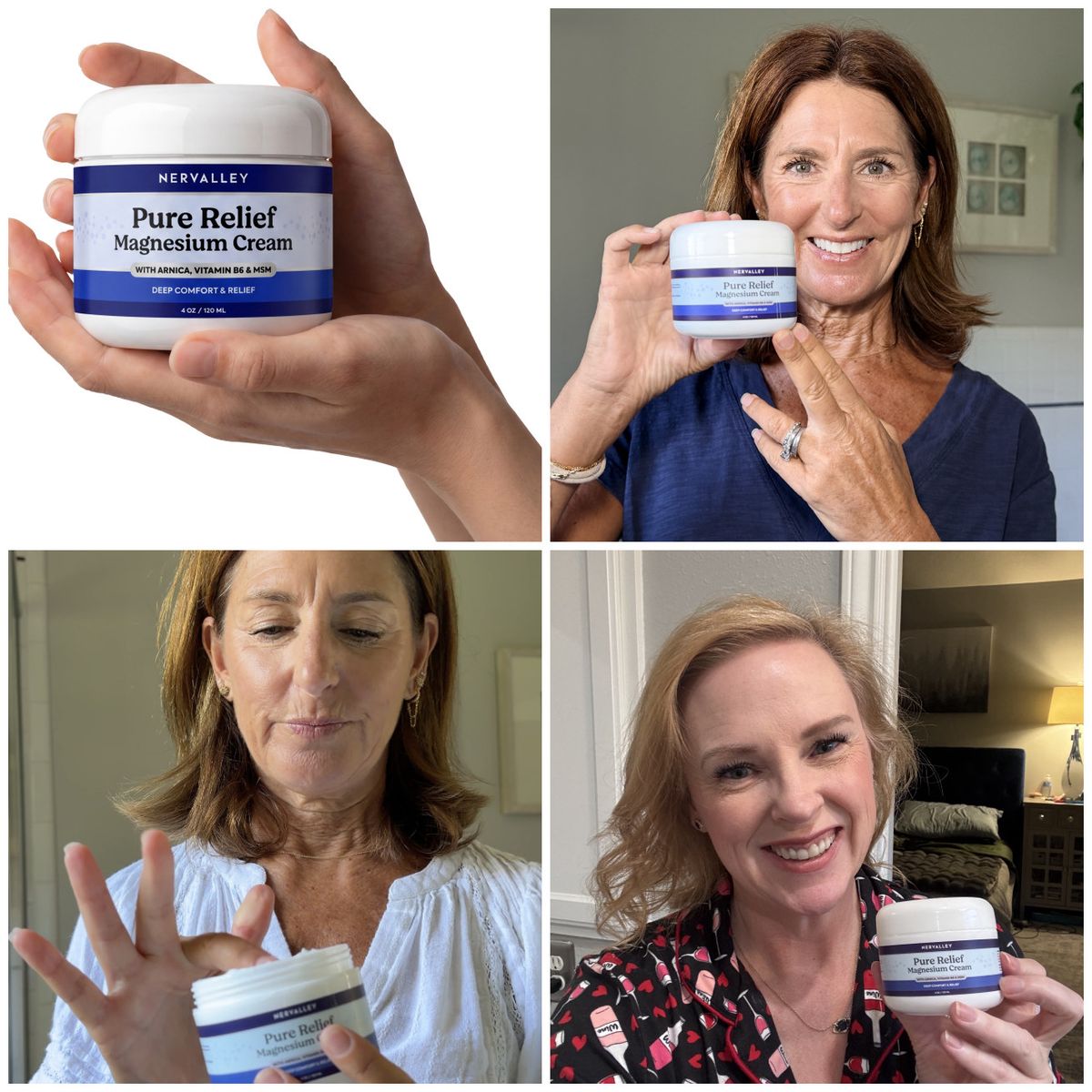
You'd think a link this straightforward would be common knowledge by now. There's a plain reason it isn't. Nervalley isn't a drug. It's a mineral your body already runs on, delivered through the skin.
Nobody can patent magnesium chloride, and nobody's going to fund the large trials that would put it in front of every physician. The money runs the other way. A worn-out knee has a lucrative script: cortisone at a few hundred dollars a shot, then the $40,000 replacement at the end of the line.
A muscle that just needed a mineral it couldn't get from a pill doesn't feed any of that. Dr. Vinson put it flatly. "There's no sales rep walking into clinics for a topical mineral," he said.
"So doctors default to the story they were trained on — the joint is wearing out. It's not a conspiracy. It's just that no one profits from telling you otherwise."
So the muscle link keeps sitting in a small pile of studies, waiting.
How Dale Got His Hands On It
You won't find this cream on a pharmacy shelf or on Amazon. The maker sells it straight from their own site, partly to keep the knockoffs and watered-down copies out, partly to keep the price sane. And the price is the part that surprised Dale. He'd already spent more than that on a single cortisone shot that lasted three weeks.
The regular price is $74 a jar. On the page where this article points, first-time buyers pay $34 a jar today. The maker says the discount is running while they clear the current batch of Dead Sea magnesium chloride.
Every order is backed by a full money-back guarantee. Dale's line on it was blunt: "The lisinopril and the glucosamine never came with one of those. This did."

Why Dale Wishes He'd Started Two Springs Ago
Here's the part Dale keeps coming back to. Nobody told him the tightness was fixable.
Three doctors, two years of pills, and every one of them treated the joint like it was simply wearing out — so he treated it that way too, and quit kneeling. But the muscle wasn't worn out.
It was short on the one mineral that tells it to let go. And a muscle that's been half-clenched for two years, Dr. Vinson said, is a harder thing to coax open than one that's been tight for two months. The grip sets in.
The surrounding tissue stiffens around it and learns the short position. That's the cost of the waiting, and it isn't abstract.
Every season the muscle stays clenched, the joint underneath carries a load it was never built to carry alone — and that quiet extra wear on the cartilage is the part that doesn't come back. Dale spent two springs believing it was just his age.
Two springs he can't get back on the floor of. He's down there now, guiding his granddaughter's small hands along the poplar. He just wishes he'd started the spring before.


REFERENCES
- Denning R. Reporting notes and interviews, Knoxville TN, 2026. Internal practice file.
- Gröber U, Werner T, Vormann J, Kisters K. "Myth or Reality — Transdermal Magnesium?" Nutrients. 2017;9(8):813.
- Reno AM, Green M, Killen LG, et al. "Effects of Magnesium Supplementation on Muscle Soreness and Performance." Journal of Strength and Conditioning Research. 2022;36(8):2198-2203.
- Zhang Y, Xun P, Wang R, et al. "Can Magnesium Enhance Exercise Performance?" Nutrients. 2017;9(9):946.
- Kass L, Weekes J, Carpenter L. "Effect of Magnesium Supplementation on Blood Pressure." European Journal of Clinical Nutrition. 2012;66(4):411-418.