Morning Back Lock-Up Isn't A Worn Disc, Here's What Finally Loosens It
A rehab doctor of 26 years explains why the pills and heating pads never reached his father-in-law's back, and the one thing that did, without shots or the chiropractor.
Dear Friend With A Back That Locks Up,
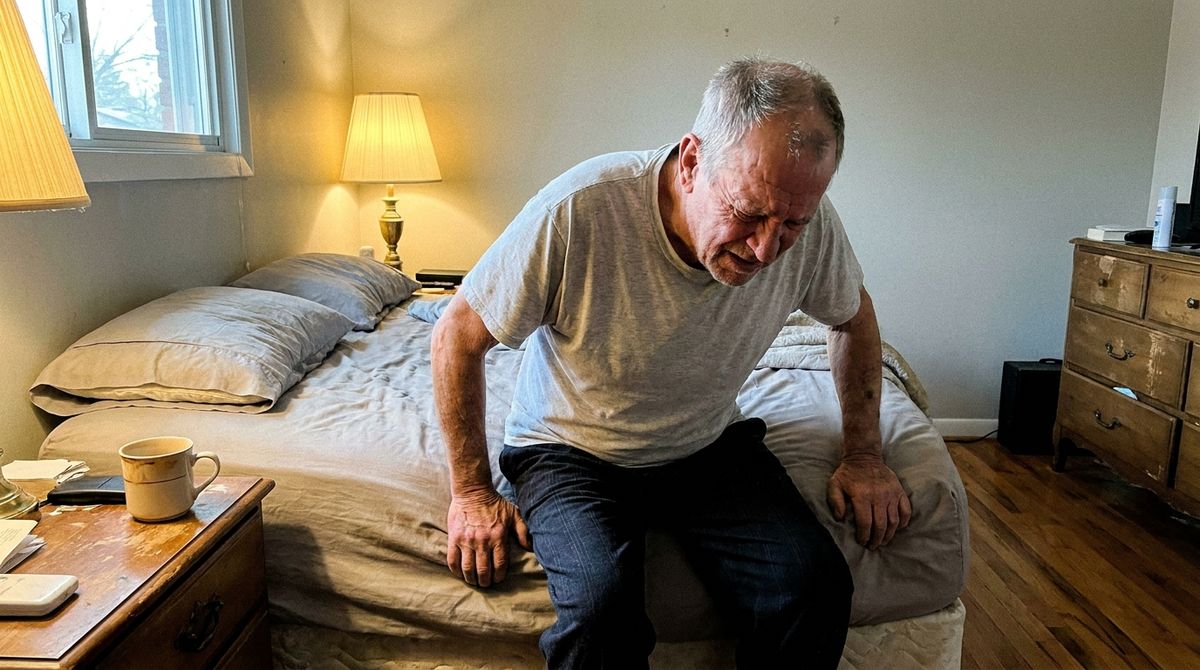
If you sit on the edge of the bed every morning working up the nerve to stand…
If the first ten steps feel like walking across ice…
If you can't twist to reach the coffee on the nightstand…
If the heating pad only quiets it for ten minutes…
If the pills left you foggy and the ache never moved…
If a doctor told you it's just a disc, just arthritis, just your age… Then what I'm about to share could change how you wake up every single morning. You are not soft. You are not old before your time. And your back is not the worn-out ruin they told you it was.
For Years I Told People There Was Nothing To Be Done
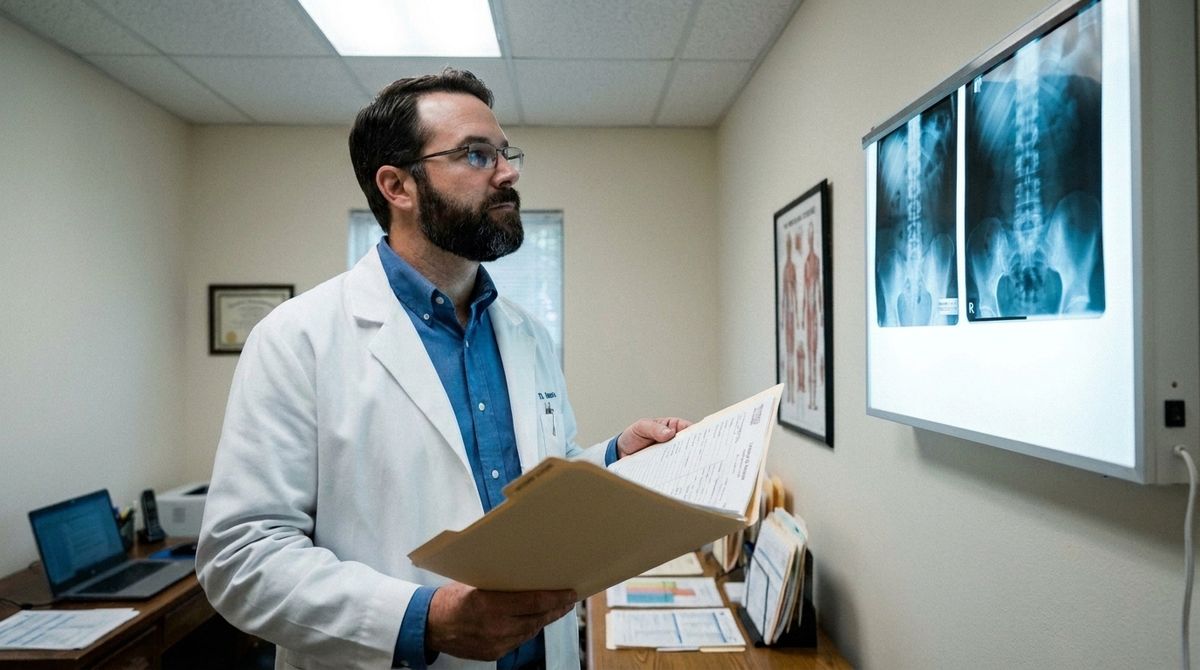
I've spent 26 years in physical medicine and rehabilitation. Backs are most of what walks through my door. And for a long stretch of those years, I told people the same tired thing. I'd look at the film. I'd press on the sore spot.
I'd say the disc is worn, the joint's arthritic, this is what a spine looks like at your age. Take the pills. Try to stay active.
Learn to manage it. I wasn't wrong about the anatomy. A worn disc is a worn disc.
But I'd made a quiet decision I never said out loud, that the pain was permanent, and my job was just to soften the edges of it. Here's the number that eventually stopped me cold.
When I went back through my own charts, 43% of the people I'd labeled 'just a disc' had spines no worse than plenty of pain-free 64-year-olds. Same films. One group in agony every morning. The other fine.
The disc wasn't the difference. Something else was. And I'd been telling all of them to live around it.
The Morning I Found Ray On The Edge Of His Bed
The person who finally made me look was my father-in-law, Ray. My wife's dad. The man who walked her down the aisle. Fifteen years he and I shared a workbench in his garage on Sunday mornings, coffee going cold while we argued about wood glue.
One Sunday last April I came by early to help him haul mulch. Let myself in. Called out.
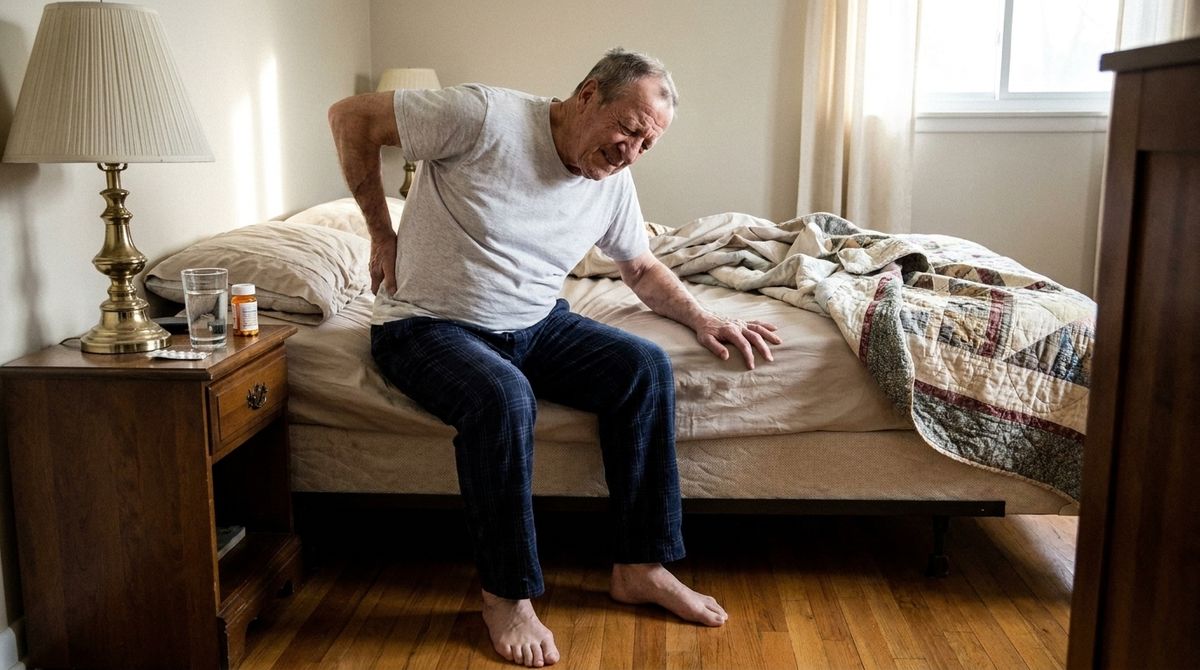
No answer from the kitchen. I found him in the bedroom, sitting on the edge of the mattress. Both hands flat on either side of him, pressing down. 7 a.m. He told me later he'd been sitting like that since five.
Not resting. Trying to talk himself into standing up. A cup of coffee his wife had brought him sat on the nightstand.
Gone cold. A thin skin across the top. He couldn't twist far enough to reach it.
I watched him stand. It took three separate moves. Hand to the dresser.
A long pause, breathing. Hand to the doorframe. Another pause.
Then finally upright, one shoulder low, like a man testing his weight on ice that might not hold. Behind him, on the workbench through the garage door, sat the cedar rocking chair he'd been building for eight months. Half finished.
For his first grandchild, due that summer. The clamps were still on it from a glue-up he'd started and never gotten back to. I stood there in his bedroom doorway and I didn't say anything smart.
I'm the doctor. I've got the letters after my name. And I had nothing.
He caught my face and waved a hand at me. "It's just a bad back, Harlan. Everybody my age has one. You learn to live around it." That line.
I'd said a version of it to a thousand people. And standing there watching him not reach his own coffee, it sounded like exactly what it was. A shrug I'd been handing out for a quarter century.
I decided that morning I was done handing it out.
Everything Ray Tried, And Why None Of It Reached The Muscle
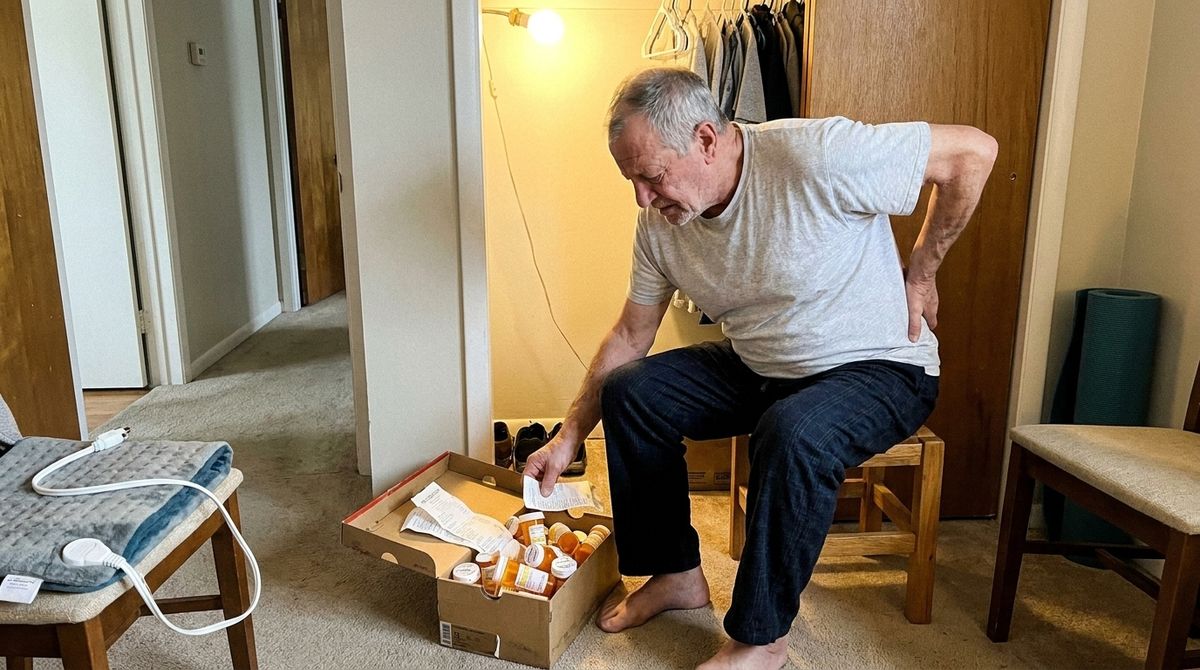
Ray was not lazy about it. That's what got me. He had a shoebox in his closet full of half-used bottles and receipts. He'd tried it all. And every single thing missed the one thing that was actually wrong.
- The gabapentin and painkillers, they turned the volume down on the pain so his brain stopped hearing it. But the muscle wrapped around his spine was still clenched, still pulling, all night. The pills never went near it. They just left him foggy enough to forget his own grandson's name for a second at the dinner table.
- The heating pad every night, it felt wonderful for about ten minutes. Then the heat faded and the muscle locked right back up, harder than before. He was heating the outside of a fist that would not open.
- The chiropractor at $90 a visit, the adjustment loosened him up for a day. By the next morning he was stiff again and back in the waiting room. The joint got moved. The reason the muscle wouldn't let go never got touched.
- Magnesium pills from the drugstore, the right idea, aimed at the wrong place. His stomach acid broke most of it down before a trace of it ever reached his back.
- The stretches an app told him to do, pulling on a muscle that's already clenched and starving just made it spasm harder, like yanking on a knot to loosen it.
The Real Reason His Back Locked Up Every Morning
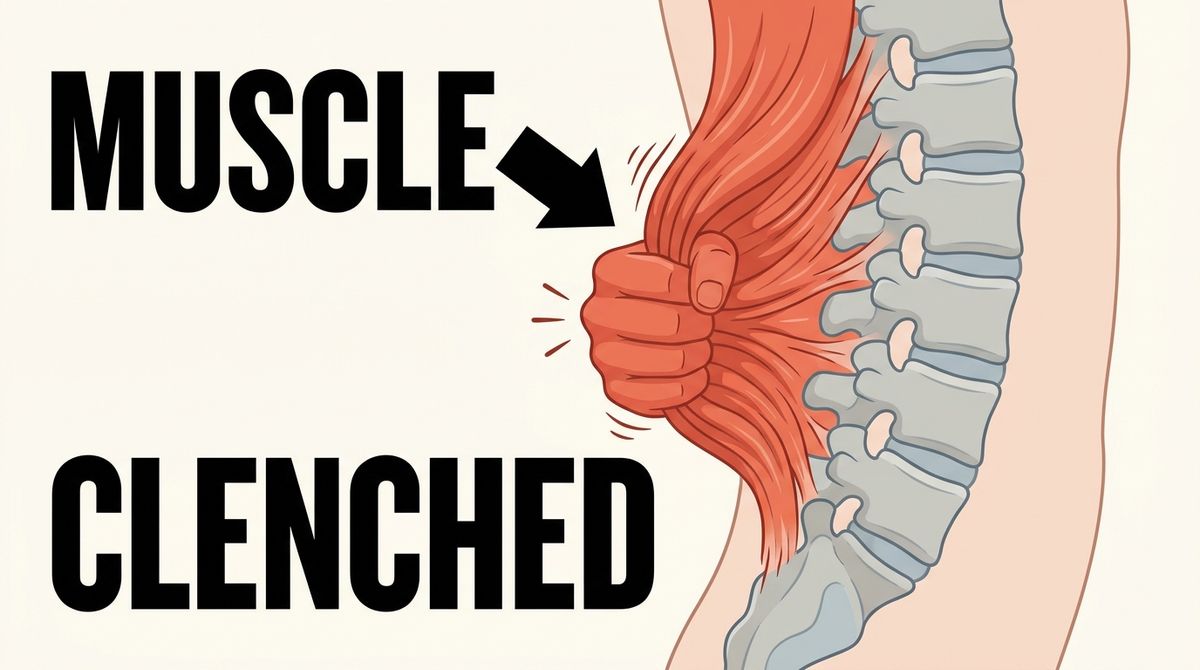
So I went back to the beginning. Not to the disc. Not to the X-ray. To the muscle itself. Here is the plain truth I'd been walking past for years. A muscle needs one specific mineral to let go of a clench, magnesium. Without enough of it, the muscle can't relax. It just stays balled up. Think of a fist that's been squeezed so long it forgets how to open. That's what was happening to the muscles wrapped around Ray's spine.
All night, clenched, pulling on the bones. By morning everything was locked solid. That's the lock-up.
That's why he needed three moves and two pieces of furniture just to stand. It was never the disc doing the pulling. It was the starved muscle around it.
And here's why the pills he swallowed did nothing. Most creams and pills for this just sit on the surface, like water beading on a dry sponge. The oral magnesium got wrecked in his stomach.
The painkillers floated past in his blood without ever landing where the clench was. Nothing he took was built to get the mineral down into the muscle that needed the signal. So the muscle kept waiting for a message that never arrived.
And every morning, it locked again. Now, why had I never seen it? Because I was trained to read scans.
Forty-three percent of my own patients had been told it was 'just a disc', including plenty who'd never even had an image that showed real disc damage. We were all looking at the bone.
Nobody was asking why the muscle around it wouldn't open its hand. Once I saw that, I couldn't unsee it. The question was suddenly simple.
How do you get real magnesium past the stomach and straight down to a muscle that's forgotten how to relax?
Here's the part almost nobody tells you. Ray's disc wasn't the problem I'd been trained to blame. When I really started listening to my own patients over the years, nearly half the men and women who came to me swearing it was 'just a disc' had never had a scan that matched their pain at all.
Somebody in a white coat had pressed on their back, seen a gray head of hair, and said the word 'disc.' That was the whole workup. The disc gets the blame.
The muscle does the pulling. Picture a fist.
Your back muscles are supposed to clench when you lift, then let go when you're done. Magnesium is the signal that tells them to let go. Without enough of it, the muscle clenches, and then forgets how to open.
It stays balled up all night, pulling on your spine. Every morning you wake up locked, because nothing ever told the fist to unclench.
What It Actually Takes To Get That Muscle To Let Go
Once I knew the fist was the problem, the fix got simple to describe. Hard to do, but simple to describe. To get a clenched, starved back muscle to finally release, three things have to happen, and they have to happen together.
I ended up calling it his Loosen-From-Within routine, because that's exactly what it does, it works from the muscle out, not the surface down. Here's the whole thing:
- Get the magnesium through the skin. Rub it straight in over the lower back so it goes down into the clenched muscle, instead of down the throat, where stomach acid wrecks most of it before any reaches the spine.
- Feed the muscle the signal it's been missing so it finally lets go of the clench, the way a fist unballs when it remembers how, instead of staying curled and pulling on the spine all night.
- Calm the soreness in the tissue around it so the muscle stays loose and doesn't re-lock by morning, instead of clenching right back up the second the relief wears off.
The Postmaster Who Talked, And The Letter That Followed
I gave that first batch to Ray. I gave it to two of my own patients the same week. One was a retired postmaster named Gary Fenn, sixty-one. Locked up every morning for four years. Told it was degenerative disc disease.
Told to manage it. He rubbed it into his lower back three nights running. On the fourth morning he stood up off the edge of his bed in one motion and didn't grab the dresser.
Gary talked. That's what postmasters do. He told his walking group, his brother, the man who cut his grass. Then a letter came to my office. It was from a regional pain clinic I'd referred patients to for years.
Polite. Formal. It said, given my "Unconventional recommendations outside the standard of care," they'd be ending our referral relationship.
Twelve years of sending them patients. Gone over a jar of cream. I read it twice.
Then I framed it. It hangs by my desk. Because a muscle that finally lets go doesn't need a refill, and a clinic that lives on refills knows exactly what that means for them.
Introducing Nervalley Pure Relief

That rough batch worked. But I'm a doctor, not a manufacturer. I couldn't hand people something I'd mixed on my own counter. So I partnered with a small formulation lab, tested it, tightened it, and turned that blend into something consistent, batch after batch.
We called it Nervalley Pure Relief. It does the three things I'd written on that legal pad. And it's built around three plain ingredients:
- Dead Sea magnesium chloride, the mineral your muscle needs to hear the signal to let go. In this form the molecules are small enough to soak through the skin, so they reach the clenched muscle instead of getting wrecked in your stomach the way a pill does.
- MSM, a natural form of sulfur that calms the swelling and soreness in the tissue around the muscle, so it stays loose instead of re-locking by morning.
- Arnica, a mountain flower healers have used for hundreds of years to quiet bruising and deep ache on contact.
What Happened In Ray's Back, Week By Week
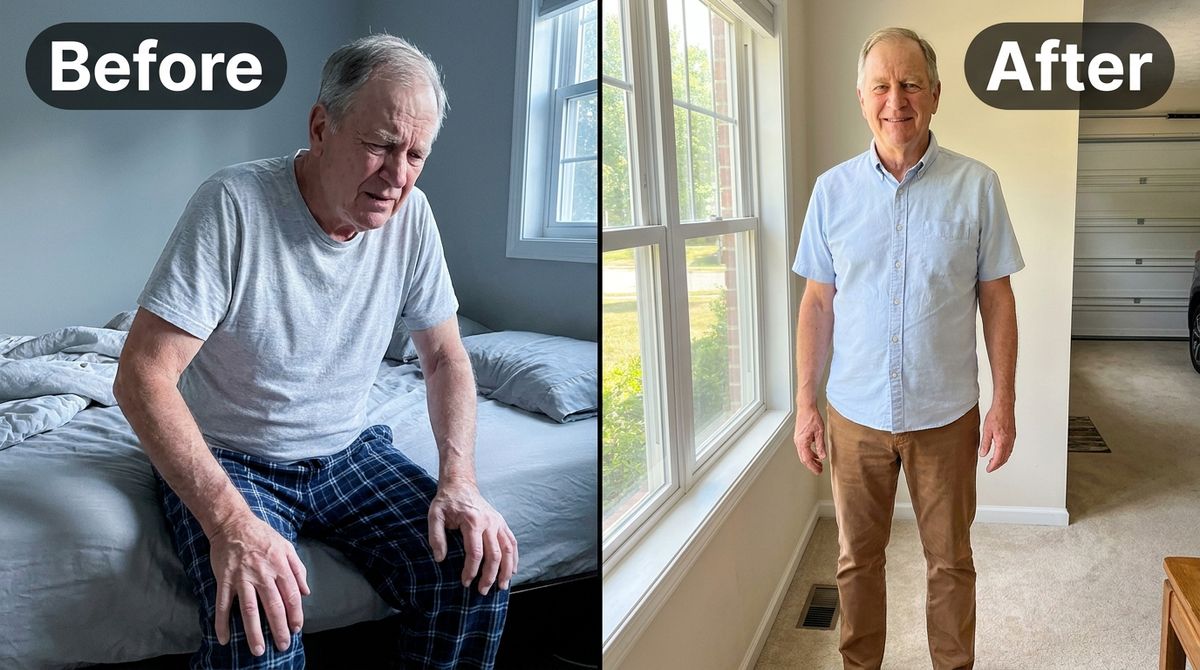
I told Ray to rub a dime-sized amount into his lower back every night before bed. That's it.
The first night, he felt the cooling within seconds and told me flat out he figured it was another heating-pad situation, good for ten minutes, then nothing. The first few days, honestly, not much. He said the morning lock-up was maybe a hair easier. Maybe he imagined it.
Then around day nine he called me. He'd stood up off the edge of the bed in two moves instead of three. "I didn't reach for the dresser," he said.
He sounded almost annoyed, like his own back had lied to him for years. Week two, the mornings kept loosening. The muscle wasn't waking up balled into that fist.
It was letting go overnight the way it's supposed to. It wasn't a switch. It was uneven.
Some mornings still stiff. But the floor was rising under him. By week four he sent me a photo.
The cedar rocking chair. Sanded. Ray back at the workbench, on his feet.
What The Mail Kept Bringing Me

After Ray, I stopped keeping this to myself. And the letters started coming. Some were three sentences on a torn envelope. Some ran two pages, front and back.
I read every one. The pattern was hard to miss. Of every ten people who wrote in, roughly eight told me the same thing eased first, the morning lock-up. The three-move rise off the edge of the bed. Gone quieter, then mostly gone.
Not the pain in general. Not tomorrow. That specific thing, standing up in the morning without talking themselves into it.
Some told me it took a week. Some said a few days.
A few said the first couple of nights they felt nothing, and I told them that was normal, a muscle clenched for years doesn't let go on a schedule. More than 312,000 jars have gone out across the country now. And very few ever come back for a refund.
- ~8 in 10 Of the people who wrote in said the morning lock-up eased first
- 312,000+ Jars used across the country
- 26 years I've spent treating backs like Ray's

What Ray Almost Paid To Chase This
Let me lay out what Ray had already spent chasing a muscle problem with the wrong tools. The chiropractor ran him $90 a visit. He went weekly for a year.
Do the math, that's more than a thousand dollars to get loosened up for a single day at a time. The gabapentin wasn't free either, and it cost him something the receipts don't show, the fog, the missed conversations, the afternoons he lost.
Then there's what came next on the pipeline. The pain specialist wanted to talk about a nerve block. That's a needle in the spine, several hundred dollars a shot, and a few weeks of quiet before the clench comes right back.
And waiting at the end of that road? Surgery. Tens of thousands of dollars to cut into a disc that, in Ray's case, was never the real problem. A cream that actually feeds the starving muscle should cost about what one chiropractor visit runs.
Fifty, sixty dollars. That's the honest number for what it does.
Chiropractor
- $90 a visit, every week
- Loose for a day, locked by the next morning
Total: $1,000+ a year
Nerve block injections
- A needle in the spine
- A few weeks of quiet, then it's back
Total: $300–$600 each
Back surgery
- Cuts a disc that may never have been the cause
- Long recovery, no guarantee
Total: $30,000+
Nervalley Pure Relief
- Rubbed into the muscle that's actually clenched
- Feeds it the signal to let go
Total: About one chiro visit
What It Costs On This Page
Here's the part I fought for. A jar should run $59, that's fair for real Dead Sea magnesium sourced the way this is. But we're not charging that here.
On this page, today, it's $34 a jar. And we cover the shipping. That's less than one visit to the man who loosened Ray up for a day.
Except this one you rub in yourself, at home, every night, for as long as you need it.
You Try It. I Carry The Risk.
I've told you Ray's morning lock-up eased inside two weeks. I've told you roughly 8 of every 10 people who wrote in said the same thing happened for them first. But you don't know that yet.
You've been let down by pills, by heat, by weekly visits that never held. Why would you trust one more jar? So here's how we do it.
Use it every night for 90 days. Rub it low on your back before bed. Give it the two, three weeks it took Ray.
If your mornings don't loosen, if you're still hauling yourself up by the bedpost, email us and we send back every dollar. You don't ship the jar back. You don't explain yourself.
You don't argue with anybody. In 26 years I've learned something about this: very few people ever ask for that refund. Not because we make it hard, because the muscle finally got what it was starving for, and they're not about to give that up.
The only thing you're risking is another year of standing up in three separate moves.
Keep Living Around It
You do what Ray did for six years. You learn the three-move stand. You keep the heating pad on the nightstand. You tell yourself it's just a bad back and everybody your age has one. And every morning the fist stays clenched.
Feed The Muscle Tonight
You get the one thing that reaches the clenched muscle and tells it to let go. You rub it in before bed. You give it two weeks. And one morning you swing your legs out and just stand up, like it forgot to hurt.
HERE'S EXACTLY WHAT TO DO NEXT
- Tap the button below to reach the order page.
- Enter your shipping details, takes about a minute.
- It arrives at your door in a few days.
- Rub a dime-sized amount low on your back every night before bed, and give it the couple of weeks it took Ray.
- When your mornings start loosening, send us a note. I read them.
What Every Locked Morning Costs You
Don't close this page yet. Here's the part I need you to hear.
Every night that clenched muscle stays balled up around your spine, it pulls a little harder on the joints it's attached to. A muscle held in a spasm for months teaches the ones around it to guard too. The lock-up spreads.
What starts in your lower back creeps into your hip, then the way you walk.
And the longer a muscle has been clenched, the longer it takes to coax it open again. A back that's been locked two months lets go far easier than one locked two years. That window doesn't reopen on its own.
Every cold, un-moved morning is a morning you don't get back. The rocking chair on the workbench doesn't finish itself. Ray sat on the edge of that bed for two hours before he could stand.
He waited long enough. You don't have to. Click below.
Take care,
Dr. Harlan Voss, MD
P.S. Ray finished the cedar rocking chair in August. He sat in it on his own porch, twisted around, easy, to hand his wife her coffee. No hand on the doorframe. That's the man I shared a workbench with for fifteen years, back.
P.P.S. If your husband or dad is the one waking up locked every morning and calling it 'just my back', trust what you've been watching. He's not being dramatic. The clenched muscle is real, and pills were never going to reach it.
P.P.P.S. When this batch of Dead Sea magnesium is gone, it's gone until the next small run, which could be weeks. Don't lose another locked morning waiting on a restock. Order at the link above.


