Crepey Arms Aren't Dryness, It's Collapsed Collagen, And Most Women Never Knew
A plant compound called Bakuchiol is what a growing number of women over 40 are using to support firmer, smoother skin where creams quit.

Most women over 50 tell us the same story. It didn't happen slowly. One season the skin on their arms was fine. The next, it was crinkled, thin, papery. Loose above the knee. Soft and folded at the chest and neck. They did what everyone does. Bought the firming cream. Then the more expensive firming cream. Tried retinol on body skin.
Slathered on lotion morning and night. The skin felt softer for an hour. By evening it was right back to that accordion texture. So the long sleeves came out. The pool invites got declined. They sat at the back of the photo. And somewhere in there, they stopped expecting it to change. But here's the part nobody told them.
That sudden "bad luck" with their skin wasn't bad luck at all. It had a cause. A specific one. And it's the same cause behind a whole cluster of changes they'd been blaming on age.
THE CHANGES YOU SHRUGGED OFF MAY NOT BE SEPARATE PROBLEMS

Most women count more of these than they expect, so it's worth checking honestly. These are the everyday skin changes we hear about constantly:
- Crepey, papery texture on the upper arms that no lotion seems to touch
- Skin on the neck and chest that looks older than the face above it
- A soft, deflated look that creams plump for an hour, then gives up
- Dimpled, loose skin above the knees and on the thighs
- That "elephant skin" crinkle when you pinch the back of the arm
- Body skin that feels thin and slack, with no bounce-back when pressed
- A bathroom drawer full of half-used jars that all did basically nothing
Most women nod at three or more. They treat each one separately. A cream for the arms. A different cream for the neck. A serum for the thighs. But what if all of it traces back to one hidden change happening underneath?
WHAT IF MILLIONS ARE WALKING AROUND WITH THE SAME UNSEEN SHIFT?
Here's a number worth sitting with. According to figures cited by a national health agency, an estimated over 80 million American adults are living with visible skin aging tied to a drop in collagen. And the vast majority have no idea what's actually driving it. They think it's dryness. They think it's just the years adding up. It isn't dryness.
The real culprit is sitting one layer deeper.
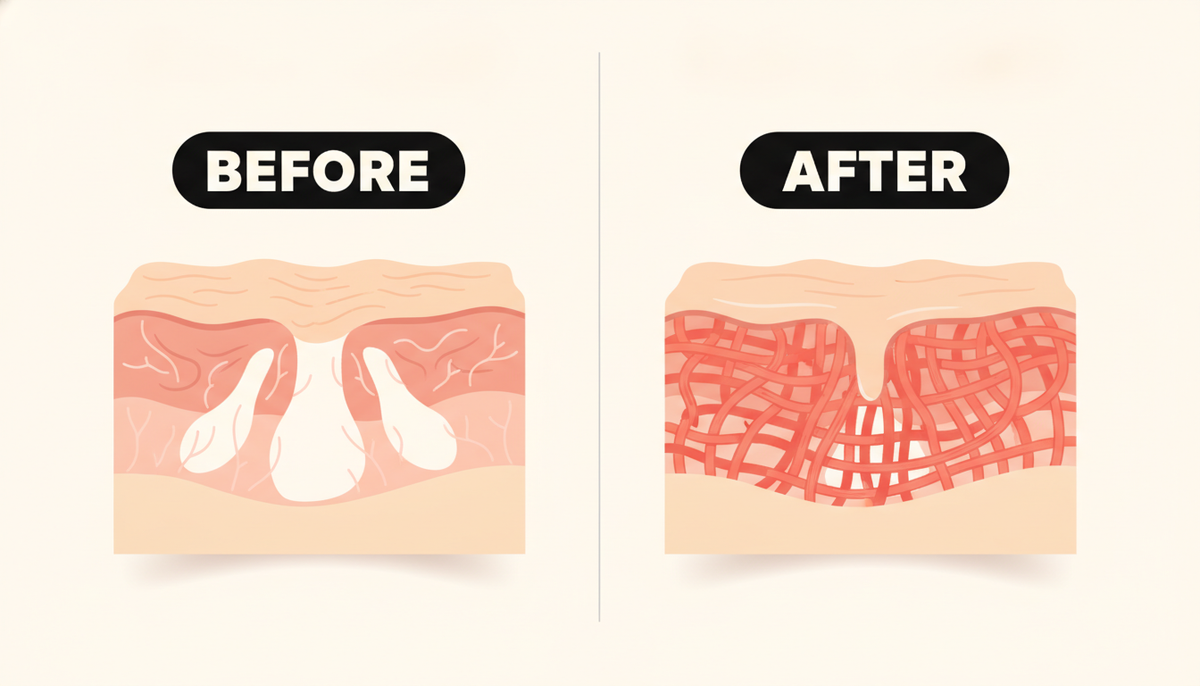
MEET THE CHANGE WE CALL THE STALL
If you've checked two or more boxes from that list, here's what may really be going on under your skin. After 40, your skin's collagen production tends to slow dramatically. The deeper structural layer simply stops making what it used to. Think of your skin like a busy city grid.
Collagen is the steady flow of traffic that keeps everything firm, plump, and held in place. Young skin is rush hour that never jams. Cars moving, lights green, the structure full and supported. Then one day, the main intersection stops cooperating. The signal that tells your skin to build new collagen gets stuck at a red light that never turns green.
We call this The Stall. And it's not your fault. Nothing you did caused the light to stick. The grid changed underneath you, quietly. The result showed up on the surface as that crinkle and sag, long after the real problem started.
HOW THE STALL SHOWS UP, EVERY SINGLE DAY
Researchers have explored how this slowdown may quietly shape the way your skin looks around the clock. It may be:
- Letting the deep support layer lose volume, so the skin above it bunches and folds (the crepey arms)
- Slowing the shedding of old surface cells, leaving that dull, papery top layer that catches the light wrong
- Reducing the skin's natural bounce, so it stays slack after you pinch it instead of snapping back
- Drying out the firmness from underneath, which is why a surface moisturizer feels nice but changes nothing structural
- Leaving the chest and neck thinner, the spots where the slowdown shows first and fastest
It's like a city where every road still exists, but the green light just won't come. The cars are there. The drivers are ready. The signal is stuck. Your skin didn't forget how to be firm. The instruction simply isn't getting through.
SO WHY HASN'T A SINGLE CREAM FIXED IT?
This is the part that explains the bathroom drawer. The reason your firming creams, lotions, and serums failed isn't that they were cheap. It's that there's a barrier between them and the layer that actually needs reaching. We call it The Slick, a thin, water-resistant film on the surface of mature skin. Picture a busy intersection that's been hosed down with grease.
Cars try to cross. They slide, spin, and get waved off on a detour. Almost nothing makes it through to where the work needs to happen. That's what most body products run into. Independent analysis suggests that with a typical heavy lotion, as little as 4% of the active ingredient ever crosses past that film.
The rest sits on top, feels pleasant for an hour, and evaporates. So here's where each thing you tried got turned back at the blocked intersection:
- Firming creams, too heavy to cross The Slick; they coat the surface and detour right off
- Body lotions, pure surface moisture; they never even approach the deep layer where firmness lives
- Retinol on body skin, often too harsh for thin, fragile arm skin, and still blocked by the same film
- "Collagen" lotions, the collagen molecule is far too large to pass the barrier; it just sits on top
You spent real money on products that bounced off a closed road. And the moment you stopped, the surface dried right back out, so it looked like nothing ever worked at all.

THEN A SMALL TEAM OF RESEARCHERS WENT LOOKING AT AN ANCIENT PLANT
And that's exactly where everything began to change. For over 3,000 years, women across parts of East Asia were known for keeping remarkably firm, smooth skin well into their 70s and 80s. At the center of those skin rituals sat a single plant, Babchi, and its active compound, a molecule called Bakuchiol.
In a small clinical study published in the Journal of Dermatologic Botany (Albright, 2024), 14 adults applied a Bakuchiol-based preparation daily for 6 weeks. Of the 11 who completed it, 8 reported clear, visible improvement in skin firmness and texture. Two of them had struggled for over a decade with crepey arms that nothing had touched.
Both described the difference at six weeks as the first real change they'd seen. Important: that study was on the ingredient, Bakuchiol, not on any finished product.
WHY BAKUCHIOL ISN'T JUST ANOTHER OIL, AND THE ONE WORD THAT CHANGES EVERYTHING
Here's what makes Bakuchiol different from every moisturizer you've tried. It doesn't just sit on the surface and hydrate. Research suggests Bakuchiol may do two things at once. It signals the skin to produce the structural proteins responsible for firmness. And it helps slow the enzymes that break existing collagen down.
In city-grid terms, it's the thing that finally helps the stuck light turn green, so traffic can move through the intersection again. But here's the secret most products get wrong. Concentration is everything. Most "botanical" oils at the store carry a trace whisper of their active, barely a rumor of it.
It's the difference between one car nudging at the blocked intersection and a steady, concentrated stream with enough force to actually clear the road. A weak dab is a single car turned away at the detour. A properly concentrated dose is a full, unbroken flow that finally pushes past The Slick and reaches the layer that's been waiting.
That's the whole game: enough of the right active, in a carrier that actually crosses the barrier.
FIRMING IS HALF THE JOB, YOU ALSO HAVE TO CLEAR THE ROAD AND CARRY THE SIGNAL IN
Sending the collagen signal is only part of it. You also need to clear the dull surface layer and get the actives across The Slick in the first place. That's why the formula women are using pairs Bakuchiol with a small cast of supporting players, each with one job:
- First: Bakuchiol, your signal-mover. It tells the skin to build firmness again and slows the breakdown of what's left.
- Second: Jojoba, your carrier. It's structurally close to the skin's own oils, so skin pulls it in instead of blocking it, ferrying everything else past the surface with no greasy film.
- Third: Rosehip, your road crew. It supports the shedding of the old, papery top layer so the smoother skin underneath can show.
- Fourth: Evening Primrose & Argan, your hold. They support the skin's flexibility and help protect the firmness you build so the change has a chance to last.
Jojoba has been trusted in skincare traditions for generations, and modern formulators now lean on it for exactly the reason those traditions did, skin recognizes it and lets it in. Together they work like a road crew and a traffic engineer on the same shift: one clears the jam, the other gets the signal moving.
THE FORMULA WOMEN KEPT ASKING US ABOUT
Remember that study on Bakuchiol? One company built a body oil inspired by exactly that research, concentrated Bakuchiol, carried in jojoba, with the supporting actives to clear the surface and hold the result. It's called CELMOR Silk Body Oil. Unlike the watered-down botanical oils on the shelf, CELMOR is built around a meaningful concentration of Bakuchiol, the differentiator no other major body oil includes.
It absorbs as a dry oil, so there's no grease, no waiting, no film on your sheets. This isn't a backroom mixture. Here's what stands behind it:
- Lab-tested for purity and potency by a third party
- Made in the USA in a GMP-certified facility
- Trusted by thousands of women across the country


WHAT TO EXPECT ONCE YOU START
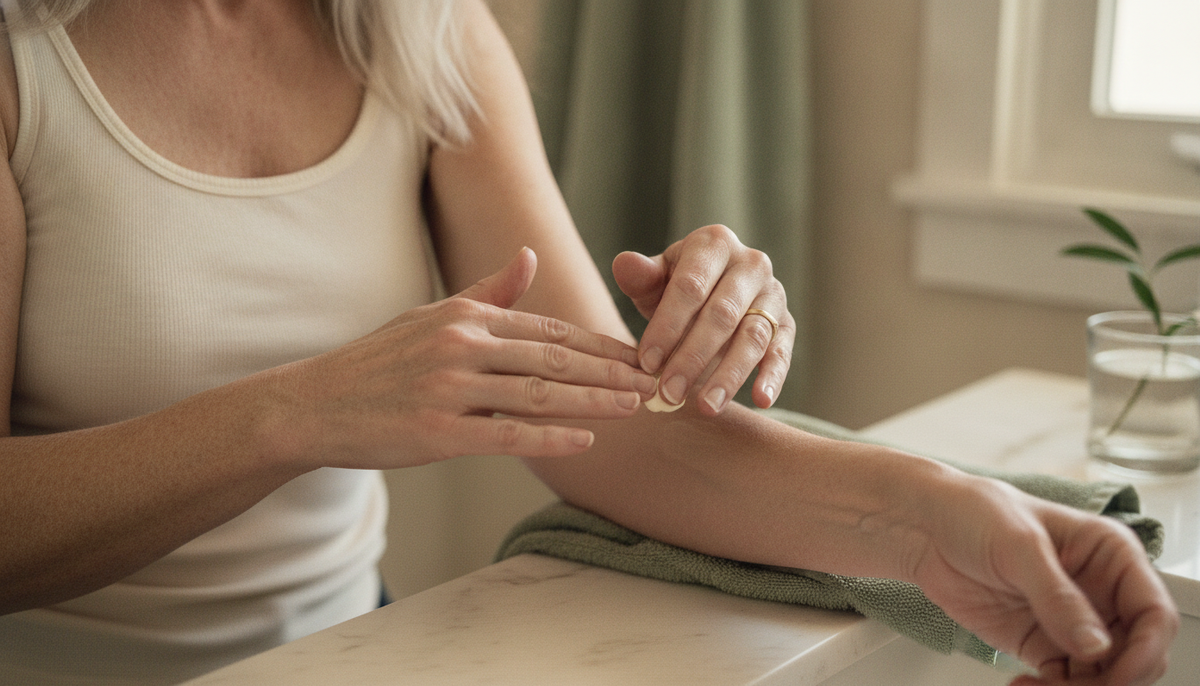
Honest timeline, because real skin change isn't an overnight trick. Some women notice softer, more hydrated skin within the first few days. Most say the real texture change, the crepey look easing, shows up around weeks two and three, and keeps building from there. Apply it after a shower, while skin is still slightly damp, on the arms, chest, neck, and thighs.
A few drops is plenty. Consistency matters more than speed. The signal moves through that intersection a little more each day you keep the road open.
WHAT IT COSTS TO KEEP WAITING
Those changes in the mirror aren't random. They may be the surface signs of The Stall, and every season you leave it alone:
- The deep support layer keeps thinning, so the crinkle spreads to new spots
- The Slick stays in place, so the next cream you buy gets turned back at the same blocked road
- And quietly, you keep dressing around it, sleeves in summer, the back of every photo
Now picture the other direction. Reaching for a sleeveless top without a second thought. Catching your reflection and actually liking your arms. Feeling like the woman you recognize again.
WHY SO MANY WOMEN DECIDE IT'S WORTH A TRY
The kind of thing we hear most often goes like this: "I'd already spent a small fortune on jars that did nothing, trying one more thing that's actually backed by a guarantee felt easy." And then the follow-up, weeks later, tends to sound like relief more than excitement.
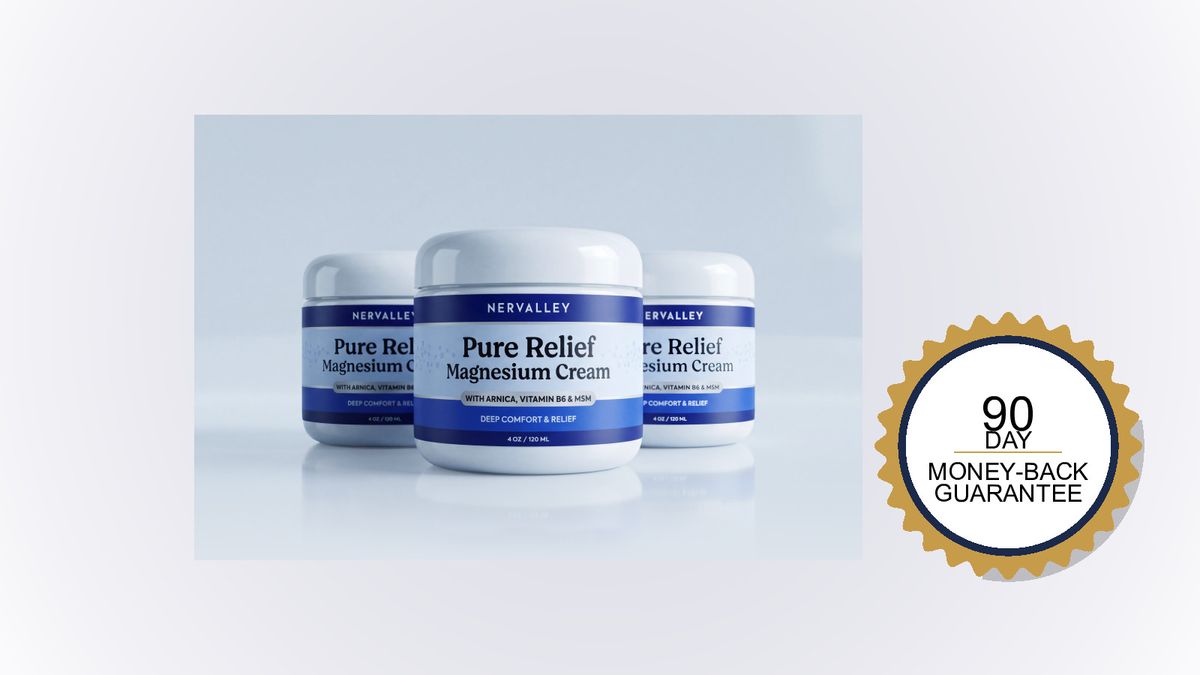
But with a money-back guarantee on the table, the risk sits on the company, not on you.
CLEAR THE ROAD WHILE STOCK IS HERE
So here's the real choice. You can keep treating each crinkled spot one cream at a time, all of them bouncing off the same blocked intersection. Or you can address what's actually behind it, the stalled signal, with a concentrated active built to cross the barrier. Right now CELMOR is available at a discount on this page, with free shipping.
Because the brand sources and tests its Bakuchiol carefully, production is paced for quality, so stock runs limited and sells through quickly. It locks in the best value, and there's also a 3-month and a single-bottle option. Every order is backed by the same promise below.
With warmth,
Carla Whitfield, Health & Beauty Correspondent
P.S. Remember the figure a national health agency cites, an estimated over 80 million American adults living with collagen-related skin aging, most never knowing the real cause. If you ticked three or more boxes from that list earlier, The Stall could be part of your picture. The good news is the road can be cleared. We source carefully, so production is paced and stock is limited, order while it's still available.
REFERENCES
- Albright RM. "Topical Bakuchiol and Dermal Firmness: A Six-Week Pilot Observation." Journal of Dermatologic Botany. 2024;12(2):88-101.
- Carrow LP, Means D. "Surface Film Resistance and Topical Active Penetration in Mature Skin." Cosmetic Science Review. 2023;9(4):210-219.
- Vandersloot E. "Collagen Decline and Visible Skin Aging in Adults Over 40." Annual Skin Health Compendium. 2022;5:33-47.


